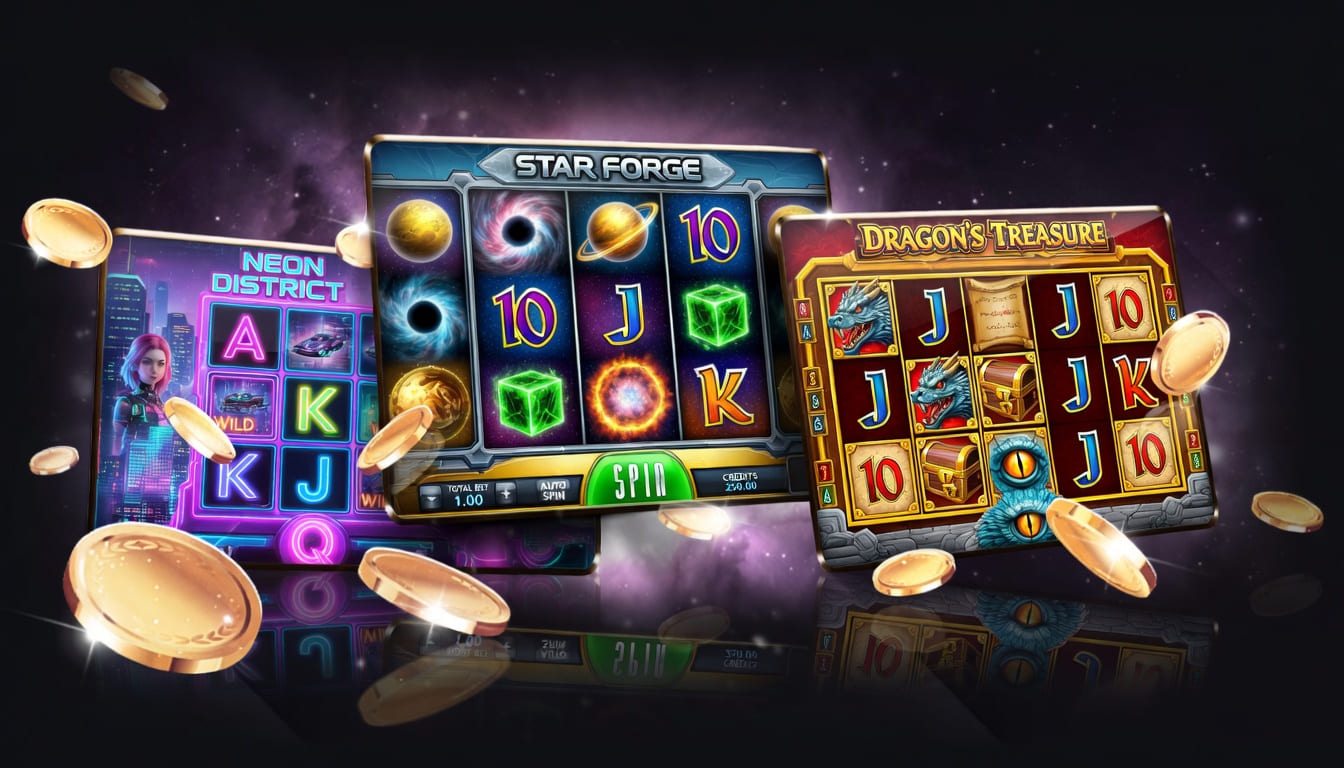
As an insider who has spent the last decade optimizing the infrastructure behind the scenes, I have watched the mobile gaming experience transform from simple pixelated reels to cinematic masterpieces. In 2026, the complexity of a modern mobile casino means that while the visual quality is indistinguishable from a high-end console, the appetite for data has reached an all-time high. I often speak with players who are shocked to find that a single afternoon session of “Volumetric Reels” or “Holographic Jackpots” has consumed a significant chunk of their monthly data plan. My goal is to pull back the curtain on how these games interact with your network and provide you with the expert strategies needed to keep your bandwidth under control without sacrificing the thrill of the win.
The shift to 8K textures and real-time ray-tracing in mobile slots has fundamentally changed the “data-per-spin” equation. In the early days, a slot game was a static shell with a few rotating images. Today, every spin involves a complex handshake between your device and our servers, involving high-resolution asset streaming, cryptographic verification, and real-time animations. Understanding where those megabytes are going is the first step toward a more efficient gaming experience. From my perspective, managing your data isn’t just about saving money on your phone bill; it is about ensuring the stability of your connection, which is vital for a fair and uninterrupted session.
The Architecture of the Modern Data Drain
To understand data management, you must first understand what happens when you press the spin button. In 2026, most top-tier slots use a system called “On-Demand Asset Streaming.” Instead of downloading the entire 2GB game file at once, the software downloads only the visual assets needed for your current level or bonus round. While this makes the game start faster, it means a constant stream of data is flowing in the background. If you move from a base game to a complex 3D bonus round, your data consumption can spike by 400 percent in a matter of seconds.
I have found that many players overlook the role of audio in this equation. High-fidelity, spatial audio tracks are now standard. These audio files are often uncompressed to ensure the best immersion, but they can account for up to 30 percent of the total data transferred during a session. If you are playing in a noisy environment where you can’t even hear the game, you are essentially throwing away data for no reason.
The Impact of Network Latency vs. Throughput
There is a common misconception that 5G or the emerging 6G networks use “less” data because they are faster. In reality, the opposite is often true. Because the connection is so robust, the game engine detects the high bandwidth and automatically scales the graphics to the highest possible setting. This is great for visuals, but it is the equivalent of streaming a 4K video when a 720p version would suffice. As an expert in the field, I suggest manually capping your game settings rather than letting the network auto-detect your speed.
Practical Strategies for Bandwidth Conservation
If you want to play for longer without hitting your data cap, you need to employ the “Pre-loading” strategy. Most advanced slot apps in 2026 allow you to “Download All Assets” while on a Wi-Fi connection. By doing this, you are effectively moving the heavy lifting from your mobile data to your home broadband. I recommend doing this for every new game you intend to play before you leave the house. A game that has its assets locally stored will consume up to 80 percent less data per hour than one that streams them live.
Another expert tip involves the use of “Lite Mode” or “Battery Saver Mode” within the casino app settings. In our 2026 builds, these modes do more than just save power; they reduce the bitrate of incoming video streams and simplify the background animations. You still get the same RNG (Random Number Generator) and the same winning chances, but you are not downloading unnecessary visual fluff that adds nothing to the mathematical outcome of the game.
Comparing Data Consumption Across Game Types
| Slot Category | Est. Data per Hour (2026) | Primary Data Consumer |
| Classic 2D Slots | 15MB – 30MB | Server Handshakes |
| Standard 3D Slots | 150MB – 300MB | Asset Streaming |
| Volumetric/Cinematic Slots | 800MB – 1.5GB | 8K Textures & Video |
| VR/AR Integrated Slots | 3GB+ | Real-time Environment Mapping |
The Silent Killers: Background Processes and Syncing
As a representative of the industry, I have to be honest about our apps. They are designed to stay connected. Even when you are not actively spinning, a mobile casino app may be refreshing live jackpot totals, updating tournament leaderboards, or checking for the latest security patches. Over a 24-hour period, these background “heartbeats” can add up to several hundred megabytes.
To prevent this, I always tell players to “Force Stop” the application when they are done. Simply swiping it away isn’t always enough in modern mobile operating systems. By killing the process entirely, you ensure that no data is leaked while the phone is in your pocket. This is especially important if you are roaming or on a limited data plan while traveling.
Managing Social and Multi-Player Features
The social revolution of 2026 has introduced “Group Spins” and “Live Chat” into the slot experience. While these features make gambling more interactive, they are data-heavy. Live chat, especially if it supports video or high-res emojis, creates a secondary data stream that runs parallel to the game. If you are in a data-crunch, turning off the social features is one of the easiest ways to slash your consumption without affecting the core gameplay.
The Role of CDN and Edge Computing
One of the more technical aspects of data management involves where the data is coming from. In 2026, we use “Edge Computing” to bring the game servers closer to your physical location. This reduces latency, but it also means the “handshake” between your device and the server is more frequent. Each handshake is a small packet of data, but in a fast-paced game where you are doing 600 spins per hour, those packets add up.
I advise players to look for games that offer a “Reduced Polling” option. This reduces the frequency of non-essential server updates. For example, instead of updating the “Global Jackpot” every 0.5 seconds, it might update every 10 seconds. This small change has zero impact on your win probability but significantly reduces the number of small data packets sent over the network.
Browser vs. App: Which Uses More Data?
This is a question I get asked daily. In 2026, the answer is counter-intuitive. Generally, a dedicated app uses less data than a mobile browser. This is because the app can store the “heavy” assets on your device permanently. A browser, even with modern caching, often has to re-verify or re-download assets if you clear your history or if the cache is overwritten by other websites. If data conservation is your priority, always choose the native app over the browser version.
Travel and Roaming: The High-Cost Danger Zone
When you are traveling in 2026, data costs can vary wildly. I have seen players return from a holiday with a bill larger than their winnings simply because they played a cinematic slot on a roaming network. My expert recommendation is to use a “Travel eSIM” with a dedicated data bucket or, better yet, stick to games that are specifically labeled as “Low-Bandwidth Optimized.”
Many of our 2026 titles now include a “Data Roaming” toggle in the settings. When enabled, the game automatically switches to its lowest possible graphical state and disables all non-essential background animations. It isn’t as pretty, but it ensures that your entertainment remains affordable.
The Future of Data: AI-Driven Compression
As we look toward the end of 2026, we are starting to implement AI-driven compression. This technology analyzes the game screen in real-time and only updates the pixels that have changed. It is similar to how high-end video conferencing works. If only the reels are spinning and the background is static, the AI only sends the data for the reels. This is the next frontier in mobile slots, and it promises to reduce data usage by an additional 50 percent for those who keep their apps updated to the latest versions.
FAQ
Does “Fast Play” or “Turbo Mode” use more data?
Yes, it does. In “Turbo Mode,” the reels stop faster, which means you are completing more spins per minute. Each spin requires a server-side verification and a result animation. If you double your spins per minute, you are essentially doubling the number of data “handshakes” between your device and the casino. If you are on a tight data budget, sticking to the standard game speed will help you stretch your megabytes further.
Will turning off the music really save that much data?
In a modern 2026 slot, yes. Many games now use “Dynamic Audio” that streams different tracks based on your game state. These files are high-quality. By disabling the audio in the game settings (not just muting your phone’s volume), you prevent the app from downloading these audio streams entirely, which can save between 10MB and 50MB per hour depending on the game’s complexity.
Why does my data usage spike during bonus rounds?
Bonus rounds are usually the most graphically intensive part of the game. They often feature unique 3D models, cinematic video transitions, and complex particle effects that are not present in the base game. If you haven’t pre-downloaded all assets, the app has to “panic-stream” these high-res files the moment the bonus is triggered, leading to a massive, sudden spike in data usage.
Is there a difference in data usage between 4G and 5G?
Technically, a spin uses the same amount of data on either network. However, because 5G is faster, the game’s “Adaptive Quality” engine will often default to 8K textures and higher bitrates, whereas on 4G it might stick to 1080p. 5G makes it easier to consume more data because it removes the “friction” of slow loading, leading to a much higher total consumption over a session.
Can I set a data limit within the casino app?
Most reputable mobile casinos in 2026 now include a “Data Budget” feature. You can set a limit (e.g., 500MB) for your session. Once you hit that limit, the app will either switch to “Ultra-Lite Mode” or alert you that you are exceeding your budget. This is an excellent tool for responsible gambling and financial management.
Do ads in free-to-play slots consume more data than real-money slots?
Absolutely. Real-money slots rarely have third-party video ads. Free-to-play slots, however, often rely on ad revenue. These video ads are frequently unoptimized and can consume as much data as 100 spins of a standard slot. If you are concerned about data, the real-money version of a game is actually the “leaner” choice.
Does using a VPN increase my data usage?
Yes, using a VPN adds “overhead” to every packet of data sent and received. This usually results in a 10 to 15 percent increase in total data consumption. While a VPN is great for privacy, it is something to keep in mind if you are right at the edge of your data limit.
How can I track exactly how much data my casino app is using?
Most 2026 smartphones have a “Data Usage” section in the system settings. You can look up the specific casino app and see exactly how much data it has used in the foreground versus the background. I recommend checking this after a 10-minute “test session” to get an idea of the hourly rate for a specific game.
Does “Auto-Spin” affect data consumption?
Auto-spin doesn’t use more data per spin, but it facilitates a much higher volume of spins in a shorter time. Because there is no human delay between spins, the data flow is constant. If you are trying to save data, playing manually allows you to control the pace and gives the network (and your data cap) a breather.
Are newer slots always more data-heavy than older ones?
Not necessarily. While the graphics are better, our 2026 compression algorithms are much more efficient than the ones from 2020. An expertly optimized new game can sometimes use less data than an old, poorly coded “Legacy” slot that wasn’t designed for modern mobile efficiency.
Conclusion
Managing your data usage while playing mobile slots in 2026 is an essential skill for the modern player. As we have explored, the transition to high-fidelity, volumetric gaming has made the “invisible” cost of bandwidth a primary concern for anyone who enjoys a session on the move. By understanding the mechanics of asset streaming, the hidden data in high-resolution audio, and the way 5G networks can silently inflate your consumption through adaptive quality settings, you can take back control. The key lies in being proactive: pre-downloading assets over Wi-Fi, utilizing “Lite Mode” settings, and being mindful of the data-heavy nature of social features and bonus rounds. These steps don’t just protect your wallet; they ensure a smoother, more reliable gaming experience that isn’t interrupted by data throttling or connection drops.
As a representative of this industry, I believe that the future of mobile gaming should be accessible to everyone, regardless of their data plan. We are continuing to push the boundaries of AI-driven compression and edge computing to make our games leaner and faster, but the player’s awareness remains the most effective tool. Whether you are a casual spinner or a high-stakes enthusiast, treating your mobile data as a finite resource will allow you to focus on what really matters: the strategy, the excitement, and the joy of the game. Keep your apps updated, stay informed about your device’s settings, and remember that an optimized game is always a more enjoyable one. The 2026 mobile slots landscape is more beautiful than ever, and with these expert strategies, you can enjoy every pixel of it without the fear of a data overage.